Beyond the Policy Limit: How Climate-Linked Financial Instruments Are Reshaping Agricultural Risk Strategy
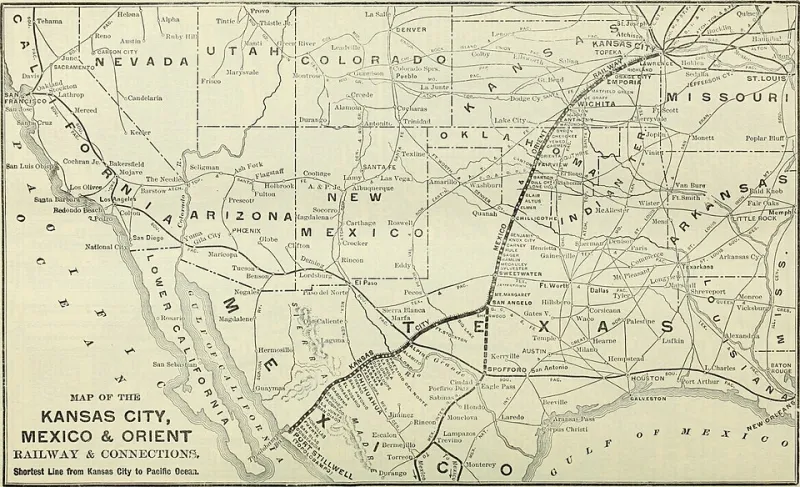
Photo: Internet Archive Book Images, No restrictions, via Wikimedia Commons
For most of American agriculture's recent history, crop insurance has served as the primary firewall between a difficult growing season and financial ruin. Federal programs such as Revenue Protection and Actual Production History coverage have provided a meaningful safety net — but that net has always had gaps. Experienced operators know that indemnity payments often arrive too late, apply too broadly, or fail to compensate for the specific weather event that actually damaged their operation.
A growing cohort of forward-thinking farmers, cooperatives, and agribusiness professionals is quietly supplementing that traditional framework with a different class of instruments: weather derivatives, parametric index products, and climate-linked financial contracts. These tools do not replace conventional insurance. They address what conventional insurance cannot.
What Weather Derivatives Actually Are
At their core, weather derivatives are financial contracts whose payout is triggered by a measurable meteorological variable — temperature, precipitation, growing degree days, or wind speed — rather than by a demonstrated crop loss. The fundamental distinction is important. Traditional insurance requires a farmer to prove yield damage. A weather derivative pays out automatically when a predefined threshold is crossed, regardless of whether the policyholder can document the corresponding loss.
The Chicago Mercantile Exchange has offered standardized weather futures and options contracts for decades, primarily structured around Heating Degree Days and Cooling Degree Days in major US cities. These instruments were originally designed for the energy sector, but their architecture translates directly to agricultural applications. A corn producer in central Illinois facing a drought scenario, for instance, can construct a position around cumulative rainfall deficits at a nearby weather station. If precipitation falls below a contractually defined level, the instrument pays — independent of what the crop adjuster ultimately concludes.
Beyond exchange-traded products, the over-the-counter market has developed a sophisticated array of custom parametric structures tailored specifically to agricultural exposures. These bespoke contracts allow operators to define their own trigger variables, measurement periods, and payout curves, creating coverage profiles that map directly onto their actual agronomic risk.
The Coverage Gap That Standard Policies Leave Open
To understand why these instruments are gaining traction, it helps to examine precisely where conventional crop insurance falls short.
Consider a soybean operation in the western Corn Belt during a year when temperatures remain persistently elevated through the critical pod-fill period in late July and early August. Actual yields may decline modestly — enough to stress cash flow but not enough to breach the coverage threshold of a standard policy. The farmer absorbs the loss without indemnity. A parametric product structured around accumulated heat units above a specified threshold during that same window would have triggered a payment regardless of the ultimate yield outcome.
Similarly, excess moisture events in the Delta or along the Missouri River corridor frequently cause localized damage that county-level yield data fails to capture accurately. When Area Risk Protection Insurance calculations average across a broad geography, an individual operator whose fields flooded can find themselves receiving little or no indemnity despite severe losses. An index product keyed to a nearby stream gauge or localized precipitation station corrects for exactly this kind of spatial mismatch.
Timing is a third dimension where conventional policies create friction. Insurance indemnities often take months to process and pay. A parametric contract, by contrast, settles within days of the trigger event being confirmed by an independent weather data provider. For operations carrying significant input debt or operating on thin liquidity margins, that speed of settlement is not a minor convenience — it is operationally critical.
Case Studies in Applied Weather Risk Management
Several operational patterns have emerged among early adopters of these instruments across US row-crop country.
The Drought Hedge in the Southern Plains. Winter wheat producers in Kansas and Oklahoma have begun layering parametric precipitation products over their standard Multi-Peril Crop Insurance coverage. These contracts are typically structured around a 90-day accumulated rainfall deficit during the critical spring green-up and grain-fill period. In dry years, the parametric payout arrives before the harvest is complete, providing liquidity that allows the operator to make forward marketing decisions from a position of financial stability rather than distress.
The Heat Stress Overlay in the Central Corn Belt. A number of larger corn and soybean operations in Iowa and Indiana have worked with specialty agricultural risk advisors to construct OTC contracts tied to cumulative heat stress indices during pollination windows. These products are calibrated to their specific hybrid selections and historical yield sensitivity data, creating a coverage layer that reflects the actual agronomic relationship between temperature and yield on their ground — not a county average.
The Prevent-Plant Supplement in the Northern Tier. Operators in Minnesota and the Dakotas, where late spring snowfall and saturated soils regularly prevent timely planting, have explored index products linked to soil temperature and moisture readings at planting-depth during the first three weeks of May. When conditions remain below threshold, the contract compensates for the income disruption caused by delayed or prevented planting — a scenario where standard prevent-plant provisions under federal programs often fall short of full income replacement.
Accessing These Markets: Practical Considerations
For operators considering entry into weather derivative markets, several practical realities warrant attention.
First, basis risk — the possibility that the index trigger does not align perfectly with actual on-farm experience — is inherent in all parametric products. The quality of the weather station network, the granularity of the measurement period, and the precision of the trigger definition all influence how closely the instrument tracks real operational exposure. Careful contract design, ideally with advisors who understand both agronomy and financial structuring, is essential.
Second, liquidity in exchange-traded agricultural weather contracts remains limited compared to grain futures markets. OTC structures offer greater customization but introduce counterparty considerations that require due diligence on the financial standing of the issuing institution.
Third, these instruments carry tax and accounting implications that differ from insurance products. Consultation with an agricultural tax professional before executing positions is advisable.
Finally, weather derivatives function most effectively as part of an integrated risk management strategy — not as a standalone solution. The operators achieving the most durable results are those who have mapped their specific yield-weather relationships with precision, identified the coverage gaps in their existing insurance portfolio, and then constructed derivative positions that address those gaps specifically.
The Analytical Foundation
At Martell Crop Projections, we have long emphasized that meaningful risk management begins with meaningful data. The same principle applies here. An operator cannot construct an effective weather derivative position without understanding, quantitatively, how their yields respond to specific meteorological variables across specific growth stages. That analysis — connecting local weather history to local yield history — is the analytical foundation on which effective parametric risk management is built.
As climate variability continues to complicate growing season outcomes across the American agricultural landscape, the operators who invest in that analytical foundation now will be best positioned to deploy these instruments effectively. The gap between price-takers and price-makers in modern agriculture increasingly runs through the quality of the risk intelligence each operator brings to the table. Weather derivatives, used with precision, represent one of the more powerful additions to that intelligence framework available today.