Patience Pays: Why Data-Driven Growers Are Outperforming the Calendar on Planting Decisions
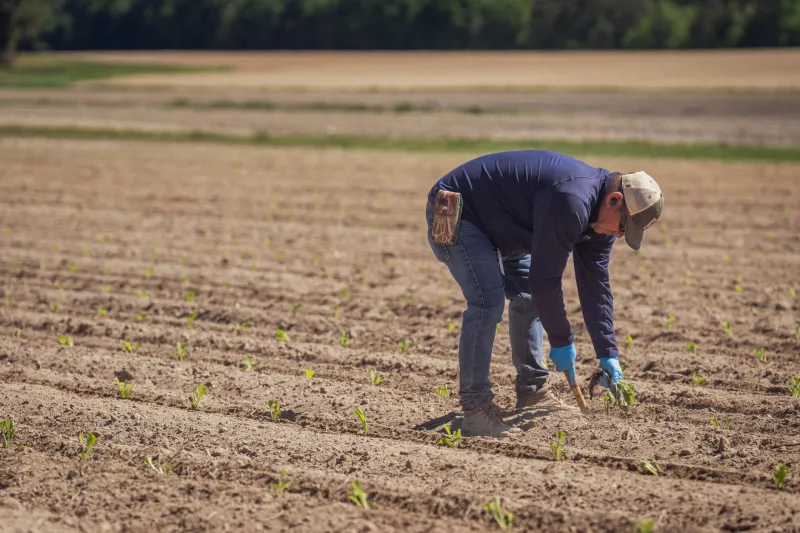
For generations, the spring planting calendar functioned less like a recommendation and more like a social contract. Neighbors watched neighbors. Equipment moved when equipment moved. Deviation invited scrutiny. But a measurable shift is underway across the Corn Belt and into the Mid-South, driven not by contrarianism but by data quality that simply wasn't available a decade ago. The farmers consistently capturing top-end yields on a field-by-field basis are increasingly the ones who waited—deliberately, methodically, and with specific numbers in front of them when they made the call.
This isn't an argument for late planting as a strategy. It's an argument for informed planting, and the distinction matters enormously when the difference between a well-timed seed placement and a stressed early emergence can represent 15 to 25 bushels per acre in final corn yield.
The Problem with the Traditional Window
Conventional planting windows—those April 20 through May 10 targets that dominate extension service calendars and lender conversations—were constructed around historical averages and equipment limitations that no longer define modern farming. They represent the midpoint of what worked across many fields over many decades. What they do not represent is what will work on your specific ground in this specific year.
Average soil temperature thresholds of 50°F at a two-inch depth remain a baseline worth respecting, but the uniformity implied by that single number masks significant variation. A field with a northern aspect, residue cover from a heavy corn crop, and poorly drained subsoil can run four to six degrees cooler than an adjacent well-drained knoll on the same morning. Planting both fields on the same day because the calendar says so is not precision agriculture—it is the appearance of precision with none of the substance.
Soil thermometers at two inches tell part of the story. What the most sophisticated operators are now monitoring is the trend line of soil temperature over a five-to-seven day window, not the point-in-time reading on a single morning.
What the Sensors Are Actually Measuring
The shift toward in-field sensor networks has given forward-thinking growers a fundamentally different information environment. Where a single county weather station once served as the proxy for conditions across tens of thousands of acres, wireless soil moisture and temperature sensors installed at field-specific depths now deliver real-time data that captures the microclimate reality of individual management zones.
The metrics that consistently drive planting delay decisions among high-performance operators fall into three categories:
Sustained soil temperature trajectory. Rather than waiting for a single reading to clear 50°F, data-oriented growers look for the five-day moving average of 2-inch soil temperature to hold above 52°F with a positive slope. A cold snap following a warm week can push a single-day reading above threshold while the underlying trend remains unfavorable for germination. The trend, not the peak, is what determines chilling injury risk.
Volumetric water content at seed depth. Moisture sensors positioned at four to six inches provide a direct read on whether the seedbed will compact under planter pressure. Volumetric water content readings above field capacity—typically above 35 to 40 percent in silt loam soils—signal compaction risk that will cost yield across the full season, regardless of how favorable the surface appears on the day of planting. Growers who plant into these conditions because the calendar says go are trading a two-day head start for a season-long yield drag.
Hyperlocal 10-day precipitation probability stacking. Modern ensemble forecast models, accessible through precision agriculture platforms and increasingly through direct API integrations with farm management software, allow growers to assess not just whether rain is coming but the probability distribution of rainfall events across a 10-day window. Planting three days before a significant rain event into marginal soil moisture conditions is a recoverable situation. Planting five days before that same event into soils already at field capacity is a different calculation entirely.
The Yield Data Behind the Patience
The agronomic case for late planting—when driven by data rather than circumstance—rests on well-documented research. University of Illinois and Purdue extension work has repeatedly shown that corn planted into optimal soil conditions on May 5 consistently outperforms corn planted into suboptimal conditions on April 22, even accounting for the yield drag associated with later planting dates. The crossover point, where date penalty exceeds condition advantage, typically falls in the May 15 to May 20 range for central Corn Belt geographies—giving growers a meaningful window of flexibility that the traditional calendar rarely acknowledges.
Soybean economics present an even more compelling case for patience. The crop's indeterminate growth habit and its ability to compensate through branching and pod set mean that planting date flexibility extends further than most growers have historically assumed. Soybeans planted into warm, well-structured seedbeds in the first week of May routinely match or exceed yields from late-April plantings that encountered cold, wet conditions.
Building a Decision Framework Around the Data
The practical challenge is not data availability—sensor costs have dropped substantially, and regional networks now provide coverage that individual farm investment couldn't justify five years ago. The challenge is building a decision framework that translates multiple data streams into a clear planting trigger.
The most effective frameworks used by professional growers share several structural features. First, they establish non-negotiable thresholds: specific volumetric water content ceilings and minimum soil temperature trajectories below which equipment does not move, regardless of what the calendar or neighbors indicate. Second, they layer in a forward-looking weather window requirement—typically a minimum of five consecutive days without significant precipitation probability following the intended planting date, to allow for adequate soil drying and emergence conditions. Third, they apply field-specific rather than farm-wide logic, recognizing that a 1,500-acre operation may have fields ready to plant on May 1 and fields that shouldn't be touched until May 12.
This field-level differentiation is where the competitive separation is most pronounced. Farms that treat planting as a single farm-wide event—moving across all ground in one or two continuous pushes—are averaging across conditions that deserve individual treatment. Farms that sequence planting based on field-specific sensor data are capturing the optimum for each management zone rather than the average across all of them.
What the Market Implications Look Like
From a market intelligence standpoint, the aggregate behavior of the planting population matters as much as any individual farm's decision. When a significant portion of acreage in a major production state falls behind the five-year average planting pace, USDA weekly progress reports reflect that lag—and futures markets respond accordingly. Growers who understand why the pace is lagging, and who have the field-level data to distinguish between weather-forced delays and strategically timed placements, are better positioned to interpret price signals and make informed forward-contracting decisions during the planting window.
The spring delay advantage, properly understood, is not about being late. It is about being precise when precision has a measurable dollar value attached to it. In a margin environment as compressed as the one American grain producers are navigating in 2025, that distinction is worth building a decision system around.