Timing Over Tonnage: How Fertilizer Application Scheduling Is Outperforming Total Rate as a Profitability Driver

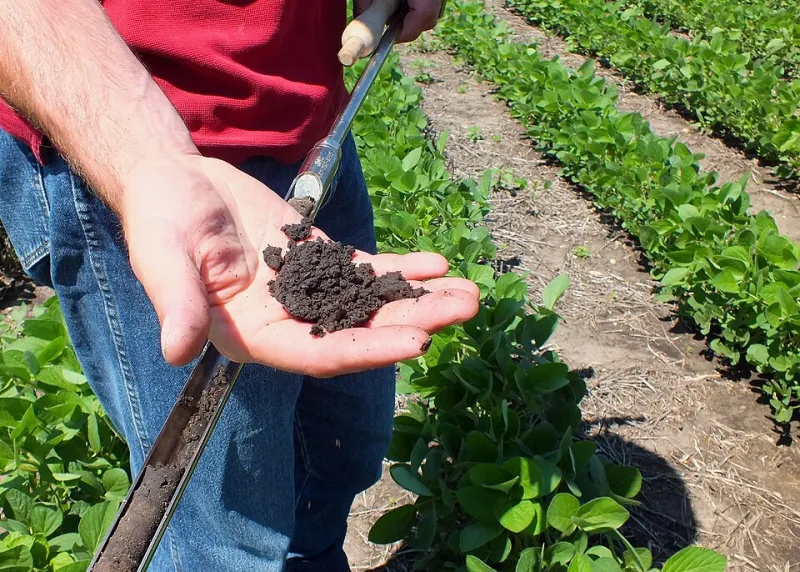
Photo: Michael Gäbler, CC BY 3.0, via Wikimedia Commons
For decades, the dominant conversation around fertilizer management has centered on rate — how many pounds of nitrogen, phosphorus, or potassium per acre a given crop requires to hit a target yield. That framing, while straightforward, has quietly obscured a more consequential variable: the timing of when those nutrients enter the soil, and what market conditions look like at that precise moment.
As input cost volatility has become a structural feature of modern agriculture rather than a temporary disruption, the microeconomics of fertilizer scheduling deserve closer attention from any operation serious about per-acre profitability.
Why Total Rate Is an Incomplete Metric
Agronomy textbooks and university extension guidelines provide nutrient rate recommendations calibrated to soil types, yield goals, and crop removal data. These recommendations remain scientifically sound as a starting point. The problem is that they were never designed to account for the intersection of commodity price swings, input market cycles, and the cash flow realities of individual farming operations.
Applying 180 pounds of nitrogen per acre in a single pre-plant pass may satisfy an agronomic threshold, but it also commits a grower to a single input cost position at a single point in the market. If anhydrous ammonia prices soften 15 percent between fall application and spring planting — a swing that has occurred multiple times in recent years — that front-loaded decision carries a real opportunity cost measured in dollars per acre, not just agronomic efficiency.
Conversely, delaying all nitrogen in hopes of a better price window while planting pressure mounts introduces a different set of risks: compressed application windows, wet field conditions that limit equipment access, and the very real possibility that early-season crop demand outpaces available soil nitrogen.
The answer is not dogmatic adherence to either extreme. It is a structured framework for deciding how to split applications based on field-level data, forward price curves, and weather probability assessments.
The Cash Flow Architecture of Split Applications
Split application strategies — most commonly dividing nitrogen into a pre-plant or starter component and a side-dress application at V4 through V6 — offer two distinct financial advantages that compound when market conditions align.
First, they reduce the capital at risk in any single input purchase decision. An operation that applies 40 percent of its nitrogen at planting and reserves 60 percent for side-dress is effectively dollar-cost averaging across two separate price environments. In a year when spring nitrogen prices decline from fall levels, as occurred in portions of the 2023 growing season, that deferred position captures meaningful savings. In years where prices rise, the pre-plant commitment provides a partial hedge against the increase.
Second, split applications improve the alignment between nutrient availability and peak crop demand. Corn, for example, takes up the majority of its seasonal nitrogen between V6 and silking. A side-dress application timed to V5 or V6 delivers nutrients closer to the window of maximum uptake efficiency, reducing the volatility losses — leaching, denitrification, volatilization — that accumulate when the full rate sits in the soil for weeks before the crop is ready to use it.
The financial implication of that efficiency gain is not trivial. Research from multiple Corn Belt land-grant universities consistently demonstrates that late-split applications can achieve equivalent or superior yield outcomes at lower total nitrogen rates compared to single pre-plant applications on certain soil types. Translated to input cost, that represents real savings per acre without sacrificing bushels.
Scenarios Where Application Timing Altered Outcomes
Consider a scenario common to the western Corn Belt in recent seasons. A grower operating on lighter, sandier soils in Nebraska applies a full pre-plant nitrogen rate in October, committing to fall anhydrous pricing. An unusually wet spring follows. Soil saturation events in April and May create denitrification conditions that measurably reduce plant-available nitrogen before the crop reaches V4. The grower achieves adequate, but not optimal, yields — and paid October prices for a nutrient that partially dissipated before it could be used.
A neighboring operation on similar ground, working with a split strategy — 50 pounds per acre at planting, remainder as side-dress — experienced the same wet spring but retained the flexibility to assess soil conditions before committing the larger application. The side-dress portion was applied at V5 into a drying soil profile. Yield outcomes were comparable, but total nitrogen applied was 12 percent lower, and the side-dress portion was purchased at spring prices that had declined from fall highs.
In a second scenario relevant to operations across the eastern Corn Belt, a grower committed to a single fall phosphorus application on fields with significant slope. Spring runoff events — more frequent in recent years given shifting precipitation intensity patterns — moved a measurable portion of that surface-applied phosphorus off the field before incorporation. The agronomic and financial loss was invisible in the yield monitor data but visible in the soil tests the following year.
A phased application approach — starter phosphorus at planting with a smaller fall application incorporated ahead of freeze-up — would have reduced runoff exposure while maintaining adequate early-season availability.
Building a Decision Framework
A rigorous split-application decision process requires inputs from three domains that generic rate recommendations do not address.
Field-level soil characterization remains the foundation. Drainage class, organic matter content, and historical leaching or runoff risk determine how much nutrient retention a given field provides between application and crop uptake. High-risk fields — poorly drained, low organic matter, significant slope — warrant more conservative pre-plant commitments and larger side-dress or in-season components.
Commodity and input price relationships provide the market intelligence layer. When the forward curve for corn suggests strong summer prices and current nitrogen prices are elevated relative to historical seasonal patterns, the economics of reducing pre-plant commitments and retaining flexibility for a better purchase window become more compelling. Monitoring the nitrogen-to-corn price ratio — a metric that has historically correlated with application rate adjustments across the Corn Belt — provides a structured way to evaluate this tradeoff rather than relying on intuition.
Seasonal weather probability assessments complete the framework. Spring weather outlooks from NOAA's Climate Prediction Center, combined with regional soil moisture data, allow growers to estimate the probability of wet-field conditions that would compress side-dress application windows. If the outlook suggests elevated precipitation risk in a given region, the case for a larger pre-plant commitment strengthens — not because the agronomy changes, but because the logistical risk of executing a timely side-dress application increases.
The Operational Discipline Required
Split applications are not without cost. They require additional equipment passes, more precise logistics planning, and a willingness to make a second purchasing decision under time pressure during the growing season. For operations with limited equipment capacity or labor constraints at side-dress timing, those friction costs are real and must be factored into the analysis.
The point is not that split applications are universally superior. The point is that the decision should be made through an explicit economic and agronomic lens — weighing nutrient efficiency gains, input cost timing advantages, and field-level risk factors — rather than defaulting to the industry standard of a single pre-plant application because it is operationally simpler.
The growers generating the strongest per-acre margins in today's cost environment are not necessarily those applying the most inputs. They are those applying the right inputs at the right time, informed by a level of analytical discipline that blanket rate recommendations were never designed to provide.