When the Numbers Override the Sky: Making Planting Decisions in the Face of Adverse Weather Forecasts
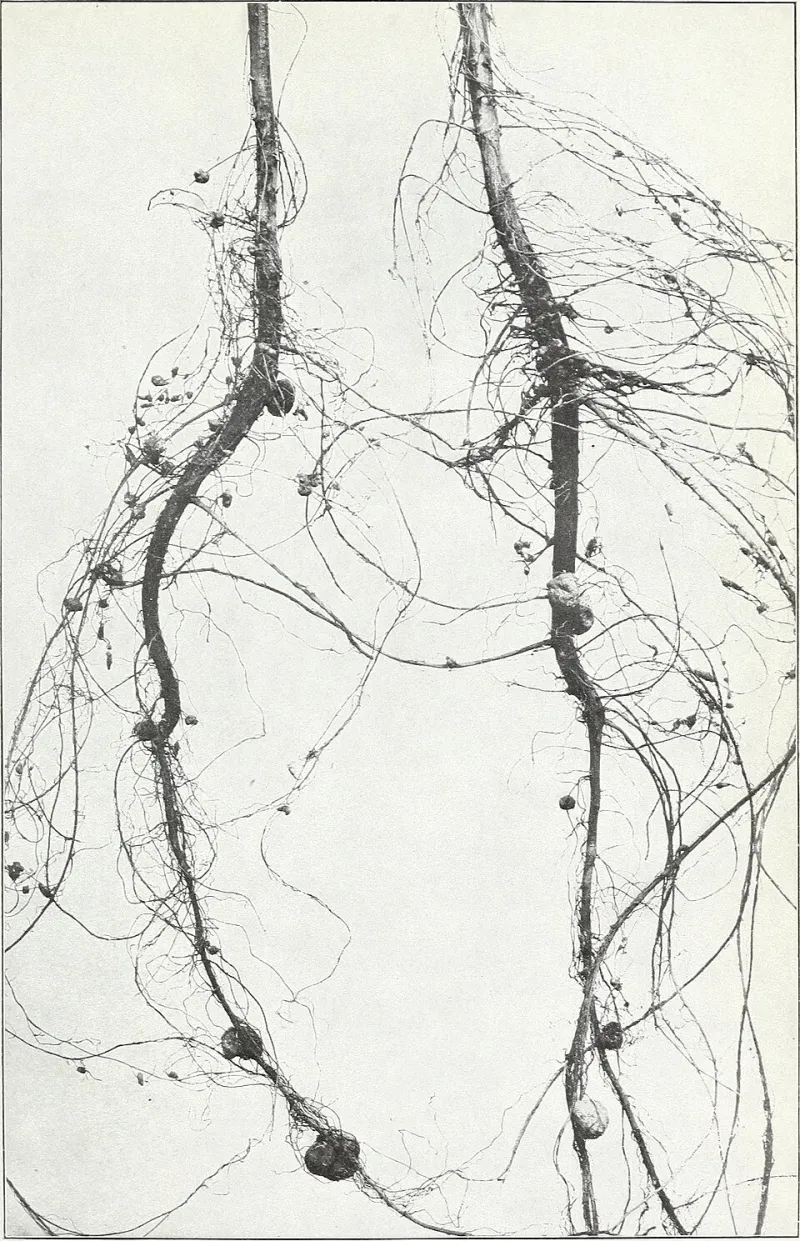
Photo: Moore, George Thomas; United States. Department of Agriculture; United States. Bureau of Plant Industry; United States. Government Printing Office, No restrictions, via Wikimedia Commons
For most of agricultural history, the relationship between weather and planting timing was treated as settled science. You watched the forecast, you monitored soil temperatures, and you waited for conditions to cooperate. The agronomic logic was sound: stress a crop in its earliest developmental stages and you pay for it at harvest. Yet something has shifted in the analytical calculus of sophisticated American producers over the past several seasons. Increasingly, the decision to plant — or not to plant — is being shaped as much by forward commodity markets as by the seven-day forecast.
This is not recklessness. It is a disciplined response to the reality that margin windows in modern commodity agriculture can be narrow, fleeting, and entirely indifferent to what the atmosphere has planned.
The Paradox at the Core of Modern Planting Decisions
Consider the position a corn or soybean producer faces when a strong forward crush spread or an elevated feed demand signal emerges in early spring — precisely when weather models are projecting a cold, wet planting window. The agronomic risk is real. Planting into cold, saturated soils increases the probability of uneven emergence, seedling disease pressure, and compaction damage that can suppress yields through the entire growing season.
But the financial opportunity is also real. If soybean processing margins are running well above their five-year seasonal average, and if forward contracts are offering prices that lock in meaningful profitability even under a modest yield discount, the expected value calculation may favor accepting agronomic risk in exchange for price certainty.
This is the margin-weather paradox: the conditions that create the most compelling financial case for early planting are often the same conditions that create the most compelling agronomic case against it.
What Forward Crush Spreads Are Actually Telling You
The crush spread — the difference between the value of soybean oil and soybean meal extracted from a bushel of soybeans and the cost of the raw bean — is one of the most information-dense signals available to row-crop producers. When crush margins are elevated, processing plants are incentivized to run at high capacity. That means consistent, aggressive demand for soybeans at the origination level, which tends to support basis and reduce the carrying risk associated with holding unpriced grain.
More importantly for planting decisions, a strong forward crush spread is a statement about expected demand several months into the future. When processors are locking in favorable margins through summer and into fall, they are signaling confidence in both the oil and meal markets. For a soybean producer evaluating a difficult planting window, that signal carries weight. It suggests that even a crop that underperforms agronomically — due to early stress — may still find a strong market at harvest.
The discipline lies in quantifying the yield discount that adverse planting conditions might impose, then determining whether the forward price still generates acceptable returns under that discounted scenario. If it does, the financial case for planting through the weather window strengthens considerably.
Feed Demand as a Leading Indicator
Beyond crush economics, feed demand signals provide an additional layer of analytical intelligence. Domestic livestock inventories, particularly in the hog and poultry sectors, create relatively predictable protein meal consumption curves. When those inventories are expanding and feed conversion economics are favorable for livestock operators, soybean meal demand tends to be structurally supported regardless of near-term weather disruptions to the crop.
For corn producers, the equivalent signal comes from cattle feeding economics and ethanol margins. A feedlot sector running at strong placement rates, combined with ethanol plants operating at or near capacity, creates a demand backdrop that can absorb supply-side uncertainty. A crop planted into marginal conditions that ultimately produces 5 to 8 percent below trend yield may still clear the market comfortably if end-use demand is running above its own historical trend.
The point is not to dismiss yield risk. It is to contextualize it within a demand framework that either amplifies or dampens the price consequences of a production shortfall.
A Framework for Weighing Margin Strength Against Weather Risk
Professional producers who navigate this tension effectively tend to work through a structured set of questions rather than relying on instinct or precedent alone.
First, quantify the yield discount. Historical agronomic data from university extension services and USDA records can provide reasonable estimates of the yield penalty associated with planting outside optimal soil temperature and moisture windows. In the Corn Belt, planting corn before soils reach 50 degrees Fahrenheit consistently produces measurable yield drag. Attaching a number to that risk — say, a 7 percent yield reduction — makes the financial analysis tractable.
Second, stress-test the forward price against the discounted yield. If the current forward contract price, applied to a yield that is 7 percent below your APH, still generates a return above your cost of production, the margin case for planting is intact. If it does not, the weather forecast is doing you a financial favor by counseling patience.
Third, assess the cost of waiting. Every day of delayed planting in the critical April-to-early-May window carries its own yield penalty, particularly for corn. Weather models are probabilistic, not deterministic. A forecast that looks unfavorable today may shift within 72 hours. Understanding the daily yield cost of delayed planting — which agronomic research puts at roughly half a bushel per acre per day for corn beyond the optimal window — allows you to set a rational threshold for how long to wait before the calculus reverses.
Fourth, evaluate basis and storage economics. If local elevator basis is strong and on-farm storage is limited, the cost of carrying unpriced grain through an uncertain harvest period rises. That factor tilts toward earlier planting and earlier pricing, even if weather conditions are less than ideal.
The Limits of This Framework
It would be a misreading of this analysis to conclude that margin strength always justifies agronomic risk. There are weather scenarios — extended cold snaps following planting, saturated soils that prevent timely field operations, late-season frost risk — where no forward price is sufficient compensation. The framework described here is most applicable when the adverse weather signal is one of suboptimal conditions rather than genuinely damaging ones.
Furthermore, basis risk and execution risk are real. A forward contract that looks attractive in March can be complicated by local delivery logistics, elevator capacity constraints, or quality discounts if a stressed crop produces grain outside specification. Margin strength at the national level does not automatically translate to margin capture at the farm level.
Precision in an Imprecise Environment
The value of integrating commodity market intelligence with agronomic decision-making lies not in finding a formula that eliminates uncertainty, but in building a framework that manages it more systematically. Weather forecasting, for all its advances, remains probabilistic. Commodity markets, for all their volatility, contain genuine information about future demand and price.
Professional producers who treat these two data streams as separate domains — one for the agronomist, one for the grain merchandiser — leave analytical value on the table. The most consequential planting decisions of any season are often made in the narrow window where the sky and the market disagree. Knowing how to adjudicate that disagreement with discipline and precision is precisely what separates price-makers from price-takers in American agriculture.