Silent Yield Thieves: How Zinc and Boron Gaps Are Quietly Eroding 2025 Profitability Before Harvest Arrives

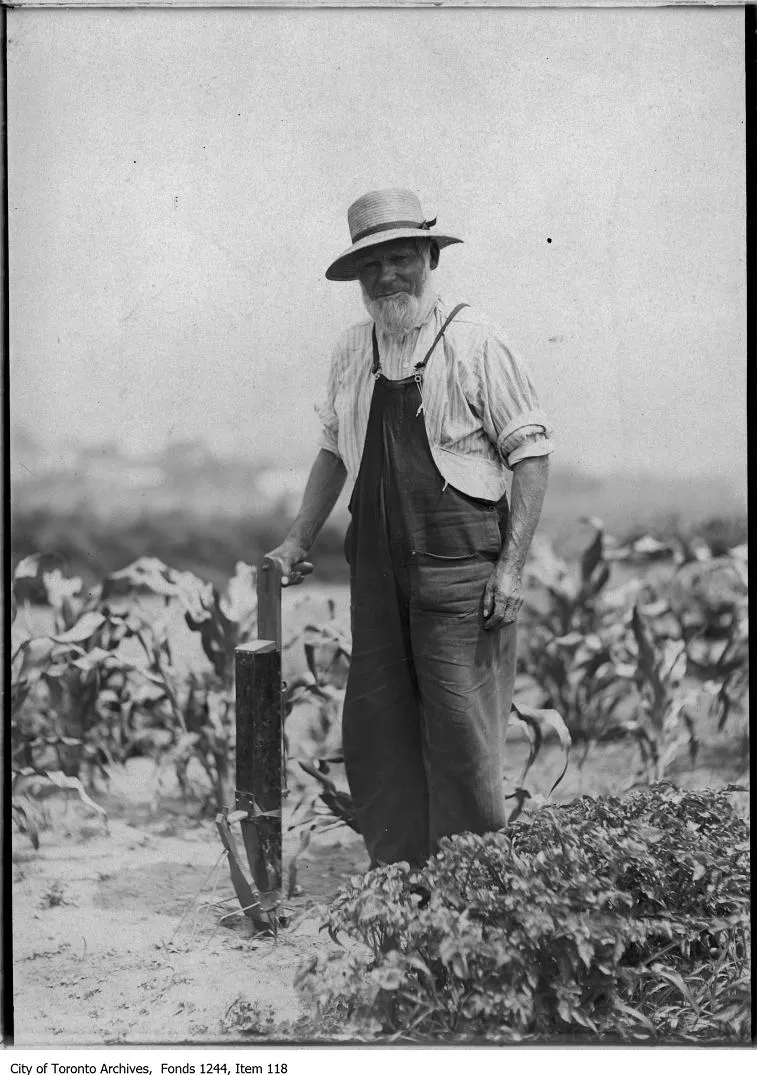
Photo: Dwight Burdette, CC BY 3.0, via Wikimedia Commons
In the current commodity price environment, producers and analysts alike are scrutinizing every input cost, every weather variable, and every futures curve inflection for margin clarity. Yet one category of yield loss continues to move beneath the radar of most standard fertility analyses: micronutrient deficiency. Specifically, zinc and boron shortfalls are operating quietly across a meaningful share of Corn Belt and Mid-South acres, shaving yield potential in ways that neither macronutrient programs nor weather models are designed to detect.
At Martell Crop Projections, our forecasting framework accounts for yield variability factors beyond the conventional inputs. When regional soil testing data, tissue sampling trends, and historical deficiency maps are layered together, a consistent pattern emerges—one that deserves serious attention from any producer or agronomic advisor running profitability projections for the 2025 season.
Why Micronutrients Rarely Make the Fertility Conversation
The structural bias in most fertility planning is understandable. Nitrogen drives yield response curves in corn more visibly and dramatically than nearly any other input. Phosphorus and potassium are well-established in university extension frameworks, and their soil test thresholds are broadly understood. Micronutrients, by contrast, are often treated as secondary considerations—addressed reactively when visual deficiency symptoms appear, or ignored entirely in years when budgets tighten.
The problem with that approach is that zinc and boron deficiencies rarely announce themselves clearly in the field. Unlike severe nitrogen stress, which produces the characteristic yellowing that moves up the plant from older leaves, zinc and boron shortfalls tend to manifest as subtle growth abnormalities, slightly reduced stand uniformity, or modest yield drag that gets attributed to weather variation after the fact. By the time a deficiency is visually obvious enough to trigger corrective action, the yield loss has already been locked in.
This is not a marginal concern. University trial data from Illinois, Indiana, and Iowa—three states that collectively represent an enormous share of national corn and soybean production—consistently show yield response to zinc application on susceptible soils ranging from 4 to 12 bushels per acre in corn. Boron responses in soybean, particularly during reproductive stages, have registered similarly in high-yield environments across the eastern Corn Belt and parts of the Delta.
Reading the Regional Deficiency Signal
Not every field carries equal risk. The soil characteristics most strongly associated with zinc deficiency include high pH (above 7.0), coarse-textured sandy profiles, high organic matter that ties up micronutrient availability, and soils that have been heavily tiled or recently leveled—all of which can reduce zinc bioavailability independent of total soil zinc content. This distinction matters: a soil test reporting adequate total zinc does not guarantee that zinc is plant-available under the conditions present during rapid early-season growth.
Boron deficiency follows a somewhat different geographic and agronomic profile. Light-textured, low-organic-matter soils in the Mid-Atlantic, Southeast, and portions of the Upper Midwest carry elevated deficiency risk. Boron is also highly mobile in the soil profile, meaning that excessive rainfall or irrigation can leach it below the rooting zone during critical growth windows. In a season featuring above-normal precipitation during vegetative stages—a pattern that several long-range models have flagged as a possibility for portions of the Corn Belt in 2025—boron availability warrants additional scrutiny.
Regional USDA soil survey data, cross-referenced with state university micronutrient deficiency mapping, can help producers and their advisors identify which field zones carry the highest probability of a yield-limiting shortfall. This is not a uniform risk across all geographies, but for those operating in vulnerable areas, the probability of losing yield to an addressable deficiency is not trivial.
Tissue Sampling as a Precision Diagnostic Tool
Soil testing provides a baseline, but it is an imperfect predictor of in-season micronutrient availability. Tissue sampling—collected at appropriate growth stages and benchmarked against established sufficiency ranges—offers a more direct window into what the crop is actually taking up. For corn, sampling at V6 through V8 provides actionable intelligence early enough in the season to allow foliar correction if deficiencies are confirmed. For soybeans, sampling at R1 through R3 captures the reproductive window when boron demand peaks and any shortfall will translate most directly into reduced pod set and seed fill.
The challenge is that tissue sampling remains underutilized in most commercial production systems. Survey data from major agricultural states consistently show that the majority of corn and soybean acres never receive a tissue test in any given season. For producers who are already investing in precision soil sampling, variable-rate fertility applications, and yield mapping, the absence of tissue sampling represents a diagnostic gap that can undermine the accuracy of the entire fertility management system.
From a forecasting standpoint, fields with no tissue sampling history and documented soil pH above 6.8 on lighter-textured ground should be treated as carrying elevated micronutrient yield risk in any projection model that aims for field-level accuracy.
The 2025 Profitability Calculation
At current corn prices in the $4.20 to $4.60 per bushel range and soybean prices near $10.00 to $10.50, the math on recoverable micronutrient yield is straightforward and compelling. A 7-bushel-per-acre yield recovery in corn—a midpoint estimate based on university trial averages for zinc-responsive soils—translates to roughly $30 to $32 per acre in additional gross revenue. Zinc sulfate applied at agronomically appropriate rates typically costs $8 to $15 per acre depending on application method and source. The return-on-investment window is wide, and the risk of over-application is low compared to the asymmetric downside of leaving recoverable yield untreated.
Boron economics in soybean follow a similar logic. A 5-bushel-per-acre response at $10.25 per bushel represents $51 per acre in potential gross recovery. Foliar boron applications during early reproductive stages carry an input cost well below that threshold in most scenarios.
The caveat, of course, is that not every acre will respond. Micronutrient applications on soils that are already sufficient will not produce measurable yield gains, which is precisely why soil testing and tissue sampling serve as the essential diagnostic step before any application decision is made. The goal is not blanket micronutrient application—it is precision identification of deficient acres and targeted correction on those specific fields.
What Competitors Are Missing
The competitive dimension of this analysis deserves emphasis. In a margin environment where the difference between a profitable season and a break-even year is measured in dollars per acre, producers who are systematically identifying and correcting micronutrient deficiencies are capturing yield that their neighbors—operating on identical weather and macronutrient programs—are leaving in the field. That yield gap does not show up in county-level averages or USDA reports. It shows up in individual operation profitability, year after year.
For agronomic advisors and analysts building 2025 yield projections, the standard model inputs of weather, planting date, and NPK fertility are necessary but not sufficient. A complete yield forecast for high-productivity ground should account for micronutrient status, particularly on soils with documented pH elevation, sandy texture, or a history of high-yield cropping that has progressively drawn down available zinc and boron reserves.
The fields most at risk are not failing visibly. They are simply underperforming quietly—and in the current price environment, that is a cost no operation can afford to overlook.